
Well diagnostics
Locate the water source before planning the intervention
A targeted intervention reported this week puts the measurement question first: which part of the well is contributing the unwanted water?
ThermalTech editorial ·
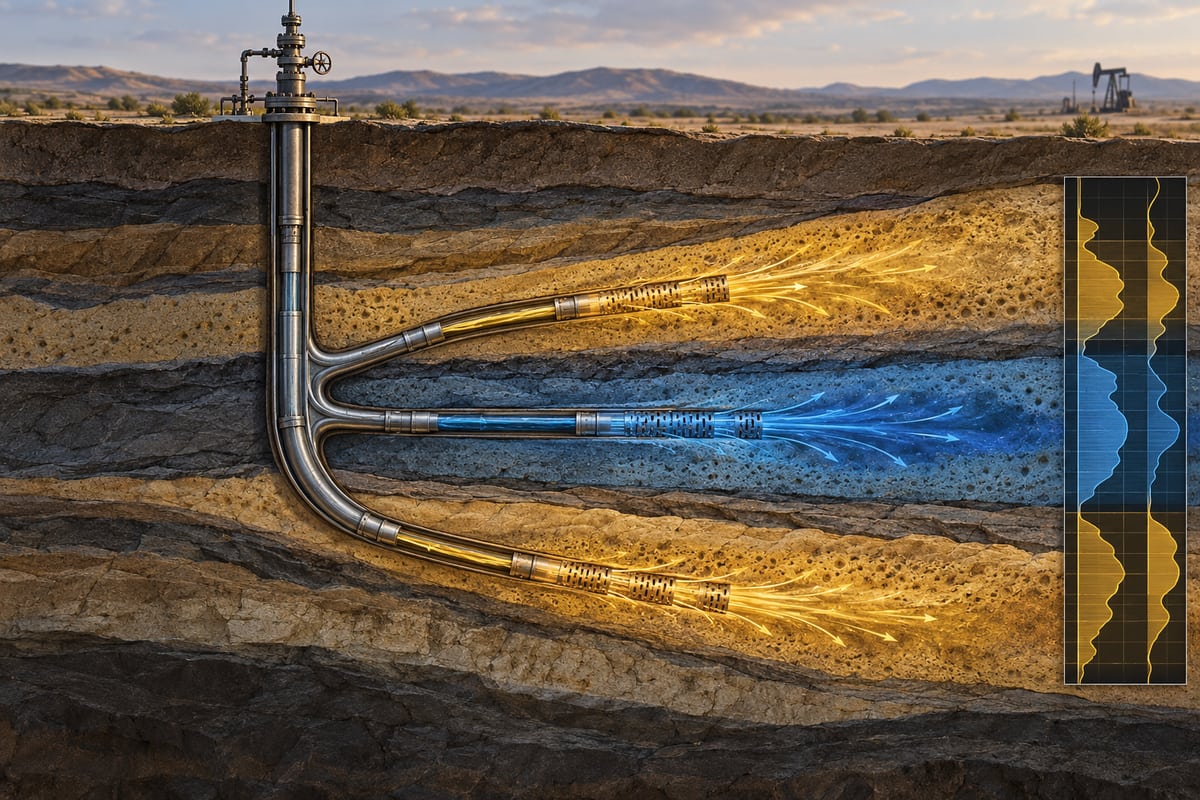
A specific branch, a specific treatment
In its October 23 quarterly release, SLB described work on a three-lateral producer in Kuwait whose water cut had reached approximately 98%. The company says its team accessed the individual laterals, identified the main water-producing branch and performed a targeted shutoff treatment. SLB reported roughly 505 additional barrels of oil per day afterward. These are supplier-reported results from one well; the announcement summarizes quarterly activity rather than dating the operation to last week.
Turn a symptom into a measurement question
For a mature California well, the useful starting point is a written question. What changed in the production history? Which interval or flow path needs investigation? What evidence would justify a particular intervention? Those questions help the operator and service provider agree on the purpose of a survey and on the limits of the interpretation.
Build the job around the evidence
Before requesting diagnostic work, assemble the current well schematic, completion history, recent operating conditions and the decision the results must support. Discuss which measurements are appropriate for that well. This is ThermalTech’s planning takeaway from the case, rather than a prediction of the same production outcome. A technically successful measurement still needs to be interpreted in its well-specific context.
Evidence and limitations
The reported intervention used SLB equipment. ThermalTech does not claim to provide that system or guarantee a comparable result.
Sources and further reading
Published: October 23, 2026
Event: Third-quarter activities; individual intervention date not stated
Checked: 2026-10-26T16:04:59.310Z