
Research watch
Methane hydrate research keeps measurements before scale
A new Alaska research contract highlights the work still needed to evaluate a potential gas resource.
ThermalTech editorial ·
What DOE announced
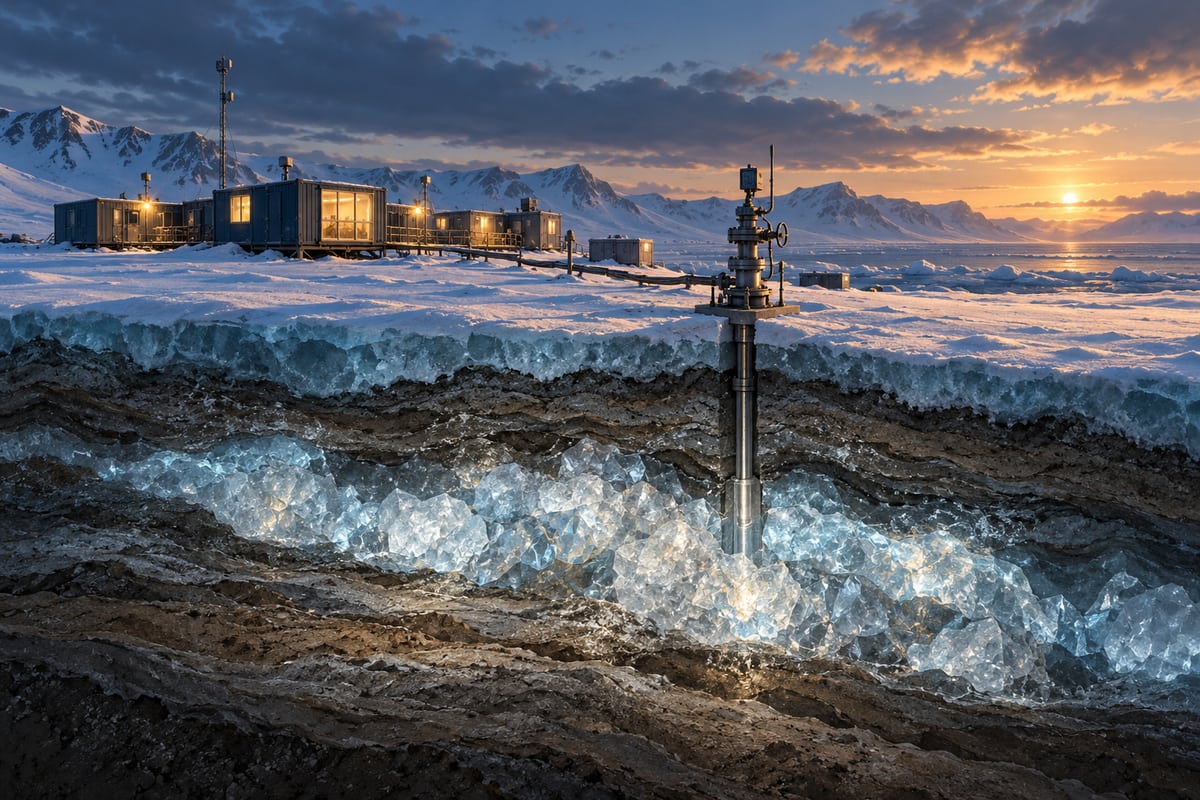
On October 14, the U.S. Department of Energy announced a five-year contract valued at up to $49.8 million for ASRC Consulting and Environmental Services. The work concerns methane-hydrate research and production testing on Alaska's North Slope.
The next test is conditional
DOE says the first phase will maintain the research site and equipment and plan a potential follow-on production test. A second phase would establish temporary production facilities if DOE exercises its option. The program is intended to help assess commercial-scale production potential; the award itself does not establish commercial viability.
Why an operator might follow the research
For California readers, the useful connection is the evaluation process. A research plan sets out which questions the next test must answer before a larger commitment is made. When reviewing a monitoring or diagnostic proposal of your own, ask what result would change the next decision, what baseline is available and what uncertainty would remain.
Keep the local conversation specific
ThermalTech can discuss a defined temperature-survey or fluid-level monitoring requirement using its existing service scope. Those local service discussions are separate from the Alaska research program. This item reports no ThermalTech participation, methane-hydrate service, California project or immediate local production opportunity.
Evidence and limitations
The announced value is a contract ceiling, and the second phase is an option. No commercial-production outcome or local work opportunity was established.
Sources and further reading
Published: October 14, 2026
Event: 2026-10-14 contract announcement
Checked: 2026-10-19